
 Skrevet af
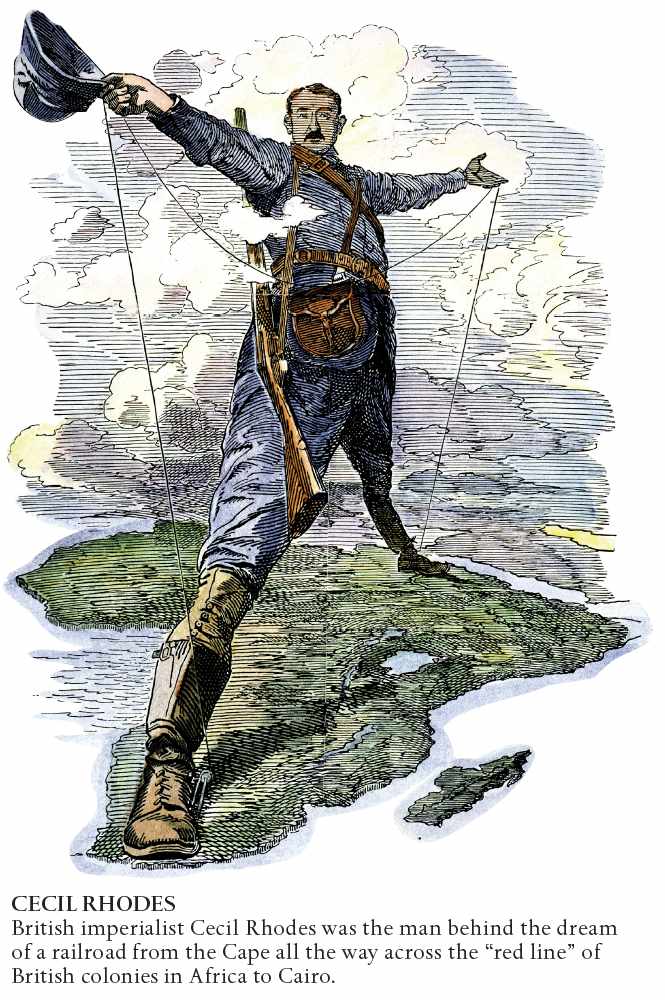
 I slutningen af 1800-tallet drømte lederen af den engelske koloni i Sydafrika, Cecil Rhodes, om at bygge en jernbane fra kapkolonien til Cairo i Egypten. Det ville “connecte Afrika” kunne man sige. Projektet blev aldrig realiseret.
Undersøg ved hjælp af omvendt billedsøgning hvor denne tegning stammer fra, hvem der har tegnet den og hvad formålet kunne være.
Internet.org
Adgang til internettet blev efterhånden opfattet som en selvfølge i de rigere lande i verden. Men det var ikke alle steder på kloden, at internetservice blev udbudt, og i mange lande var det kun et fåtal som havde råd til det.
I august 2013 præsenterede Mark Zuckerberg en plan, som skulle hjælpe flere mennesker i udviklingslande med at komme på internettet.
I sin præsentation af planen argumenterede han for at internetadgang (connectivity) faktisk burde være en menneskeret.
Mark Zuckerberg: Is Connectivity a Human Right?
August 21, 2013


For almost ten years, Facebook has been on a mission to make the world more open and connected. Today we connect more than 1.15 billion people each month, but as we started thinking about connecting the next 5 billion, we realized something important: the vast majority of people in the world don’t have access to the internet.

Today, only 2.7 billion people are online — a little more than one third of the world. That is growing by less than 9% each year, but that’s slow considering how early we are in the internet’s development. Even though projections show most people will get smartphones in the next decade, most people still won’t have data access because the cost of data remains much more expensive than the price of a smartphone.

Below, I’ll share a rough proposal for how we can connect the next 5 billion people, and a rough plan to work together as an industry to get there. We’ll discuss how we can make internet access more affordable by making it more efficient to deliver data, how we can use less data by improving the efficiency of the apps we build and how we can help businesses drive internet access by developing a new model to get people online.

I call this a “rough plan” because, like many long term technology projects, we expect the details to evolve. It may be possible to achieve more than we lay out here, but it may also be more challenging than we predict. The specific technical work will evolve as people contribute better ideas, and we welcome all feedback on how to improve this.

Connecting the world is one of the greatest challenges of our generation. This is just one small step toward achieving that goal. I’m excited to work together to make this a reality.
Kilde:
https://about.fb.com/news/2013/08/mark-zuckerberg-is-connectivity-a-human-right/
Hvad er formålet med initiativet?
I 2014 opdaterer han om projektet
Mark Zuckerberg på Facebook i 2014
In our effort to connect the whole world with Internet.org, we've been working on ways to beam internet
to people from the sky.
Today, we're sharing some details of the work Facebook's Connectivity Lab is doing to build drones,
satellites and lasers to deliver the internet to everyone.
Our goal with Internet.org is to make affordable access to basic internet services available to every
person in the world.
We've made good progress so far. Over the past year, our work in the Philippines and Paraguay alone
has doubled the number of people using mobile data with the operators we've partnered with, helping 3
million new people access the internet.
We're going to continue building these partnerships, but connecting the whole world will require
inventing new technology too. That's what our Connectivity Lab focuses on, and there's a lot more
exciting work to do here.
Our team has many of the world's leading experts in aerospace and communications technology,
including from NASA's Jet Propulsion Lab and Ames Research Center. Today we are also bringing on key
members of the team from Ascenta, a small UK-based company whose founders created early versions of
Zephyr, which became the world’s longest flying solar-powered unmanned aircraft. They will join our
team working on connectivity aircraft.
You can find more details on our efforts below. We're looking forward to working with our Internet.org
partners and operators worldwide to deploy these technologies and deliver on the dream of connecting
the world.

Kilde: https://www.facebook.com/zuck/posts/10101322049893211
I 2018 havde omkring 100 millioner mennesker fået adgang til internet via ‘Internet.org’ — ifølge Zuckerberg selv.
🤔 What’s the catch?
Undersøg ved hjælp af kunstig intelligens, hvorfor Facebook fik kritik for dette initiativ. Bed om at få originale kilder på sagen.
Forbered en mundtlig fremlæggelse på 5–10 min. Vælg mindst 1 kilde, som du præsenterer i forbindelse med dit svar. Begrund dit valg.
(udkast!)